
618-692-4900 Call 24/7 For Your Free Consultation
Champaign Drug Trafficking Lawyer
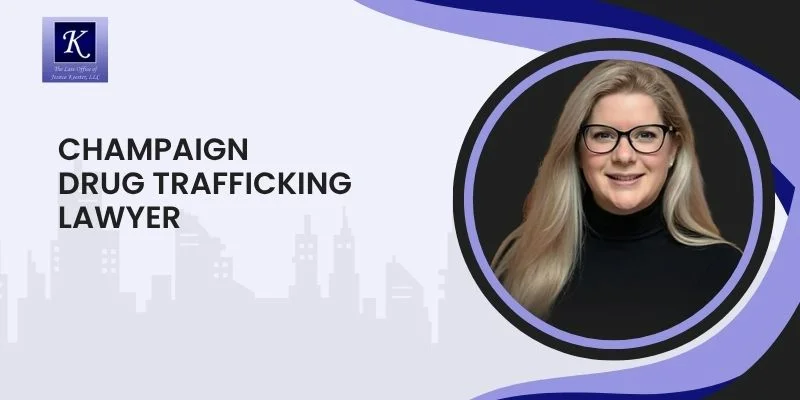
Experienced Drug Trafficking Attorney in Champaign
Being accused of bringing drugs into Illinois, or holding enough of a controlled substance that police believe you planned to sell it, can turn your life upside down fast. You need someone who knows what the state has to prove, and where that proof can fall apart.
Jessica Koester is a Champaign criminal defense lawyer. She has practiced law in Illinois since 2002, earned her law degree from the University of Notre Dame, and established The Law Office of Jessica Koester, LLC as a solo practice built around personal attention.
She reviews the stop, the search, and the weight calculations prosecutors rely on, looking for where a case can be challenged. Contact her for a free consultation to learn more about your rights and what the next steps may look like in your case.
Drug Trafficking Charges Our Champaign Defense Lawyer Handles
Drug trafficking charges in Illinois cover more than moving large shipments across state lines.
Prosecutors in Champaign County bring these charges whenever they believe someone brought a controlled substance into Illinois with the intent to sell or deliver it. Sometimes, this follows a stop along Interstate 57 or Interstate 74. We help clients fight:
- Controlled substance trafficking charges under Illinois law
- Possession with intent to deliver heroin, cocaine, methamphetamine, or cannabis
- Manufacturing or production charges
- Charges stemming from traffic stops, search warrants, or wiretap evidence
- Multi-defendant conspiracy and streetgang-related drug conspiracy charges
- Cases that get referred into federal jurisdiction
Each charge carries its own proof requirements, and the specific amount of drug involved can change the entire sentencing range you’re facing.
What an Illinois Drug Trafficking Conviction Can Cost You
Illinois treats drug trafficking as a far more serious charge than straight possession, and the penalties reflect that. Under 720 ILCS 570/401.1, a trafficking conviction carries a prison sentence of at least twice the minimum and up to twice the maximum that Illinois’s manufacture-and-delivery statute sets for the same amount of drug. Meth and large-quantity cannabis trafficking are covered by separate laws with similar doubling. For many weight thresholds, that means a mandatory minimum prison sentence with no option for probation. Fines in trafficking cases can reach $1 million or more on top of prison time.
Meet Our Champaign Drug Trafficking Defense Attorney
Jessica Koester has practiced law in Illinois for more than two decades, and that experience shapes how she approaches a Champaign drug trafficking case from the start. She has co-authored a LexisNexis legal analysis of Illinois search-and-seizure law. This work informs how she examines whether a stop, a search warrant, or a vehicle search met constitutional standards before charges were ever filed.
She has also served on the Illinois State Bar Association’s Committee on Corrections and Sentencing since 2012, giving her a close view of how sentencing ranges and mandatory minimums actually get applied.
As a sole practitioner, she handles your case herself rather than handing it off to someone else in the office.
Frequently Asked Questions
Do I need a lawyer right away if I’m facing drug trafficking charges in Champaign?
Yes. Illinois drug trafficking charges carry mandatory minimum prison sentences that often remove probation as an option, and early decisions, like whether you waive a preliminary hearing, can affect your case. The sooner a lawyer can review the stop, the search, and the weight calculations behind your charges, the more options usually stay open.
What’s the difference between drug possession and drug trafficking charges in Illinois?
Possession charges focus on what you had. Possession with intent charges add the claim that you planned to sell it. Drug trafficking charges apply specifically when prosecutors believe you brought a controlled substance into Illinois from another state or country to sell or deliver it. Trafficking raises both the minimum and maximum prison terms to double those of an ordinary possession-with-intent charge for the same amount of drug, and doubles the fine.
Will my case be heard at the Champaign County Courthouse?
Most felony drug charges filed in Champaign County are handled through the Champaign County Circuit Court, based at the Champaign County Courthouse at 101 East Main Street in Urbana. Depending on how the investigation develops, federal prosecutors could also bring their own charges in federal court.
Could a drug trafficking charge in Champaign also become a federal case?
It can, particularly when the amount involved is large or the investigation involves agencies like the DEA or a multi-jurisdictional task force. Federal drug trafficking charges carry their own sentencing structure and are handled in federal district court rather than Champaign County Circuit Court, so it matters early on which track your case is likely to follow.
Can the search that led to my charges be challenged?
Sometimes. Many drug trafficking cases start with a traffic stop, a search warrant, or a tip that may not have met constitutional requirements. If the stop or search was unlawful, the evidence collected from it can sometimes be thrown out, which can weaken or end the state’s case.
What happens at my first court date in Champaign County?
Your first court date is an Initial Appearance, where the judge reads the charges and informs you of your rights. Because Illinois has abolished cash bail under the Pretrial Fairness Act, the judge determines whether you will be released with specific conditions or detained in jail pending trial if the State files a detention petition. Having a lawyer present at this first appearance is critical to fight detention petitions, argue for minimal release conditions, and protect your rights from the very start.
How much does it cost to talk to a Champaign drug trafficking lawyer about my case?
A consultation costs nothing. We review the charges, the evidence as you understand it, and what you’re facing before making any decision about moving forward together. This gives you a clearer picture of your options without any upfront commitment.
Experienced Trial Attorney
Get Started On Your Criminal Defense
618-692-4900 Call 24/7 For Your Free Consultation
Take the Next Step With a Champaign Drug Trafficking Lawyer on Your Side
Drug trafficking charges move fast, and the window to challenge a stop, a search, or a weight calculation can close before you’ve had the chance to prepare. Jessica Koester has practiced law in Illinois for more than two decades, and as a sole practitioner, she handles your case personally from the first conversation onward.
Your first consultation is free. Reach out today to talk through what you’re facing and what may come next.
Aggressive Criminal Defense In State And Federal Court
Get Started On Your Criminal Defense
Fields Marked With An “*” Are Required

100 North Main Street
2nd Floor, Suite 1
Edwardsville, IL 62025 Get Directions
© 2026 The Law Office of Jessica Koester, LLC • All Rights Reserved.
*Images are obtained under license from Canva and other third-party stock image providers, with attribution included where required.
Digital Marketing By: 