


618-692-4900 Call 24/7 For Your Free Consultation
What Are the Penalties for a Felon in Possession of a Firearm in Illinois?
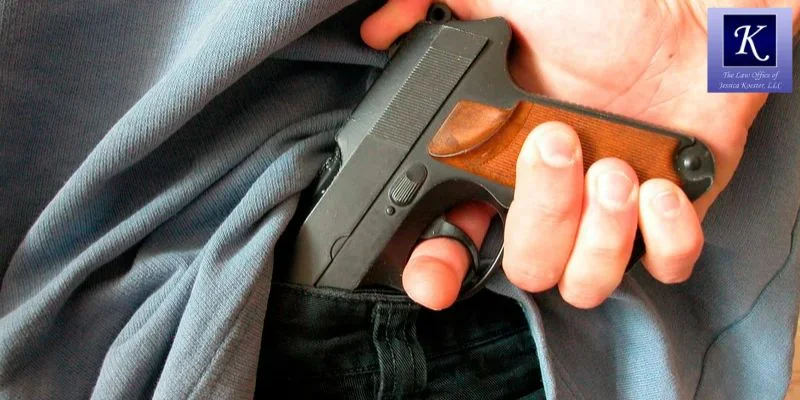
A new charge on top of an old felony is frightening, and it’s natural to feel unsure about what comes next. Under state law, that past conviction makes it a crime to knowingly have a gun or ammunition, even years after the sentence has ended. For anyone facing this charge, the penalties for a felon in possession of a firearm in Illinois range from a few years in prison to decades.
That range is wide because every case is different. Prior record, parole status, and the type of weapon involved all affect where a case may fall. An experienced attorney can explain the options and possible defenses and help plan the next steps.
With more than 20 years of experience practicing law in Illinois, Jessica Koester offers that kind of guidance to people across Edwardsville and the Metro East. When you’re ready, contact The Law Office of Jessica Koester, LLC for a free consultation to talk through what happened.
What Does Illinois Law Actually Prohibit?
Under the Illinois felon in possession law, it’s illegal for anyone with a prior felony conviction to knowingly possess a firearm, ammunition, or certain other weapons. That includes a weapon on you, in your car, or at your home, land, or business.
The law’s key phrase is “knowingly possess,” which means prosecutors have to prove two things: that you knew the gun was there, and that you could control it. A gun in your pocket meets that test, but so can one in your car’s center console or your nightstand. That’s why the charge can apply even when the gun belongs to someone else, and why it can be challenged if you didn’t know it was there.
How Illinois Sentences a Felon in Possession Conviction
Sentencing for this charge depends mostly on two things: your criminal history, including whether you were on parole at the time, and the kind of weapon involved.
Here’s how those factors line up with the felony classes:
- First offense, not on parole: a Class 3 felony, punishable by 2 to 10 years in prison.
- Second or later offense, or a violation while on parole or mandatory supervised release: a Class 2 felony, punishable by 3 to 14 years.
- Possession while wearing or carrying body armor: a Class X felony, punishable by 10 to 40 years.
- Possession of a machine gun: a Class X felony, punishable by 6 to 30 years.
A longer criminal record can also lead to a different charge altogether. Someone with multiple qualifying prior convictions, such as an earlier forcible felony or weapons case, may be charged as an Armed Habitual Criminal, a Class X felony carrying 6 to 30 years.
Could This Become a Federal Case Too?
Even if Illinois is already bringing a case, federal prosecutors can file their own charges over the same gun crime. Here are the basics:
- Who it applies to: Federal law bans anyone with a felony conviction from having a gun or ammunition. This covers nearly every gun sold in the U.S.
- The penalty: Up to 15 years in federal prison. The 2022 federal gun law raised the maximum from 10 years.
- Can there be two cases? Illinois and the federal government can each charge the same gun.
A second case also means a second courthouse. In the Metro East, federal cases go to the U.S. District Court for the Southern District of Illinois. Jessica Koester has been admitted to practice there since 2004, so she can handle both cases.
If agents or police have already reached out, request a consultation before answering any questions.
What Happens to Your FOID Card After a Felony Conviction
A felony charge does more than put your freedom at risk. It can also affect your Firearm Owner’s Identification (FOID) card, which Illinois requires to legally possess a firearm or ammunition. Because a felony conviction disqualifies you from holding one, the Illinois State Police can revoke your card.
When that happens, the 48-hour FOID surrender rule kicks in. Within 48 hours of receiving the revocation notice, you have to turn in the card and account for any guns you own. For people living in Madison County, that means going through the local police department, the Madison County Sheriff’s Office, or the Illinois State Police.
Missing that deadline can lead to an additional charge on top of the original one. And it’s only one of several timelines that may be running at once:
- The FOID revocation: the 48-hour surrender window and any follow-up paperwork.
- The state criminal case: court dates, bond conditions, and plea discussions.
- Any federal case: a separate court with its own schedule.
A felon in possession of a firearm possession attorney can help keep track of these deadlines and reduce the risk of a missed step creating new problems.
Can Your Gun Rights Ever Come Back in Illinois?
For some people, firearm rights aren’t gone forever, though getting them back is rarely quick. Illinois built a specific legal path for people who want to try. Under the FOID rights restoration petition process, a person can ask to have firearm rights restored once certain conditions are met:
- No forcible felony conviction anywhere in the past 20 years, or at least 20 years since release from prison for one.
- No reasonable likelihood that holding a FOID card again would endanger public safety.
- Restoring the card would not go against the public interest.
- Restoration would not conflict with federal law.
Meeting these conditions is only the first step. For most people with a felony record, the final decision belongs to a judge in their home county, not the Illinois State Police. The process takes paperwork and time, so it helps to get guidance before filing.
Frequently Asked Questions
Does a felony conviction from another state count against me in Illinois?
Yes. The Illinois felon in possession law applies to a felony conviction from any state or federal court, not just an Illinois case. If you’re unsure whether an older out-of-state conviction still counts against you, a consultation can help sort out your specific record.
What if the gun belongs to someone else, like a roommate or family member?
Ownership and possession are not the same thing under Illinois law. If prosecutors can show you knew about the firearm and could control it, the charge can still apply even when someone else legally owns the gun.
Can a governor’s pardon restore my firearm rights in Illinois?
A pardon from the governor is a separate path from the FOID restoration petition, and it can restore firearm rights if the pardon specifically addresses them. Not every pardon automatically covers firearm rights, so the wording matters.
Does probation count the same as parole for sentencing purposes?
No. The enhanced Class 2 sentencing range applies specifically to people on parole or mandatory supervised release, not standard probation from an earlier case. Someone on ordinary probation violation who picks up this charge still faces the base Class 3 felony range unless other prior convictions apply.
Does the gun have to be loaded or operable to count as illegal possession?
No. Illinois law does not require the firearm to be loaded or in working condition for a felon in possession charge to apply. Knowingly possessing the firearm or its ammunition is enough to trigger the charge.
The Law Office of Jessica Koester, LLC: Your Illinois Weapons Charge Defense Law Firm
A felon in possession charge in Illinois can bring several issues at once: where the case falls in the sentencing range, a FOID revocation, and sometimes a second case in federal court.
Untangling which charge class applies, and whether prosecutors can prove you knew about the gun and could control it, usually comes first. Small details on those points can change how a case turns out.
Contact our firm today to talk through the charge with Jessica Koester and get a clear picture of where things stand.
Experienced Trial Attorney
Get Started On Your Criminal Defense
618-692-4900 Call 24/7 For Your Free Consultation
Aggressive Criminal Defense In State And Federal Court
In state and federal court from an experienced trial attorney.
Get Started On Your Criminal Defense
Fields Marked With An “*” Are Required

Address
100 North Main Street
2nd Floor, Suite 1
Edwardsville, IL 62025 Get Directions
Phone 618-692-4900
Fax: 618-307-5870
© 2026 The Law Office of Jessica Koester, LLC • All Rights Reserved.
*Images are obtained under license from Canva and other third-party stock image providers, with attribution included where required.
Digital Marketing By: 